
Why Class 8 Maths Foundation Matters More Than Parents Think
Early algebra habits compound. Here’s how small gaps become expensive later—and how to fix them systematically.
Lead educator, Earnest Scholars Academy

Next step (optional)
See if we're a fit—no pressure
If the article resonated, a short diagnostic is usually the calmest way to decide on structured coaching.
Request a demo·+91 95039 23514
If you only remember one idea from this piece, let it be this: progress in mathematics is mostly the quality of repeated decisions—which problems you attempt, how you review mistakes, and how honestly you separate “almost understood” from “exam-ready.”
This article is written for families in and around Pune who want accuracy-first pacing, habits, and extension without chaos. It aligns with how we structure programmes at Earnest Scholars Academy—with emphasis on fundamentals, measurable routines, and respectful pacing.
Your headline goal (study tips) is easier when weekly work is predictable, legible, and slightly harder than comfortable—but never chaotic.
A simple framework you can use this week
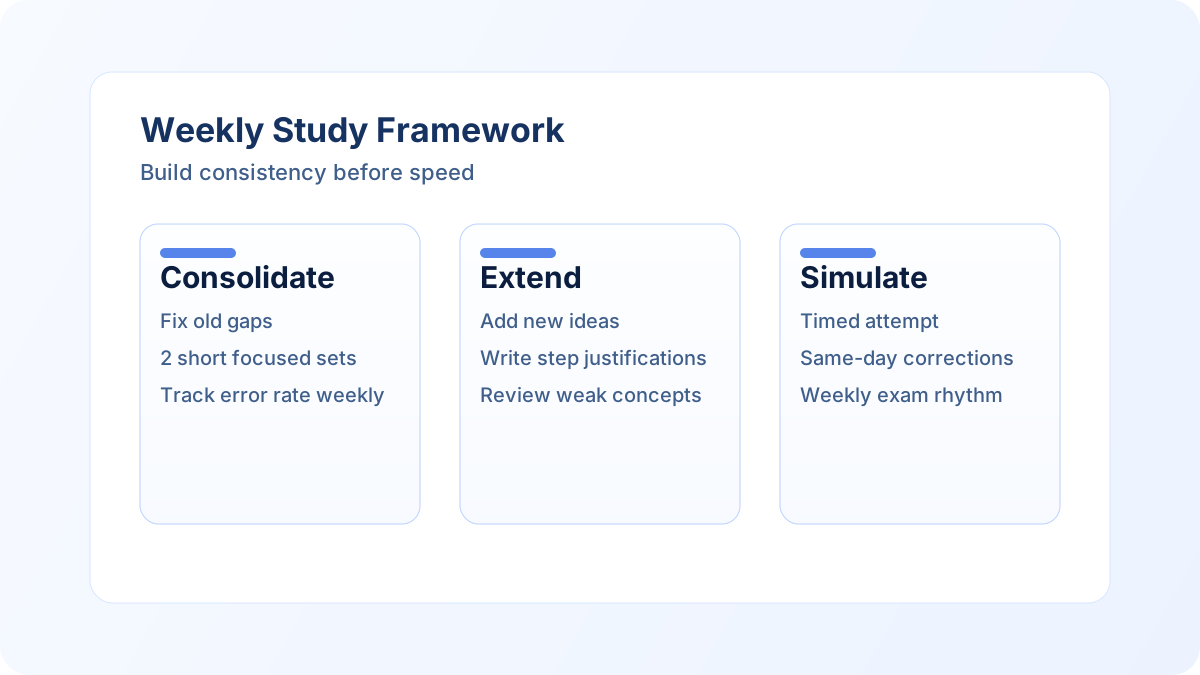
Most students don't lack effort; they lack a repeatable weekly architecture. Use three buckets: consolidate (fix older gaps), extend (new ideas), and simulate (timed integrity). If one bucket disappears for weeks, performance becomes brittle.
- Consolidate: pick two older topics with recurring errors; do short, focused sets until error rate drops—not until boredom arrives.
- Extend: follow the classroom sequence, but insist on written justification for steps you usually “feel.”
- Simulate: one timed attempt weekly, with review the same day while memory is fresh.
What to do with mistakes (so they actually disappear)
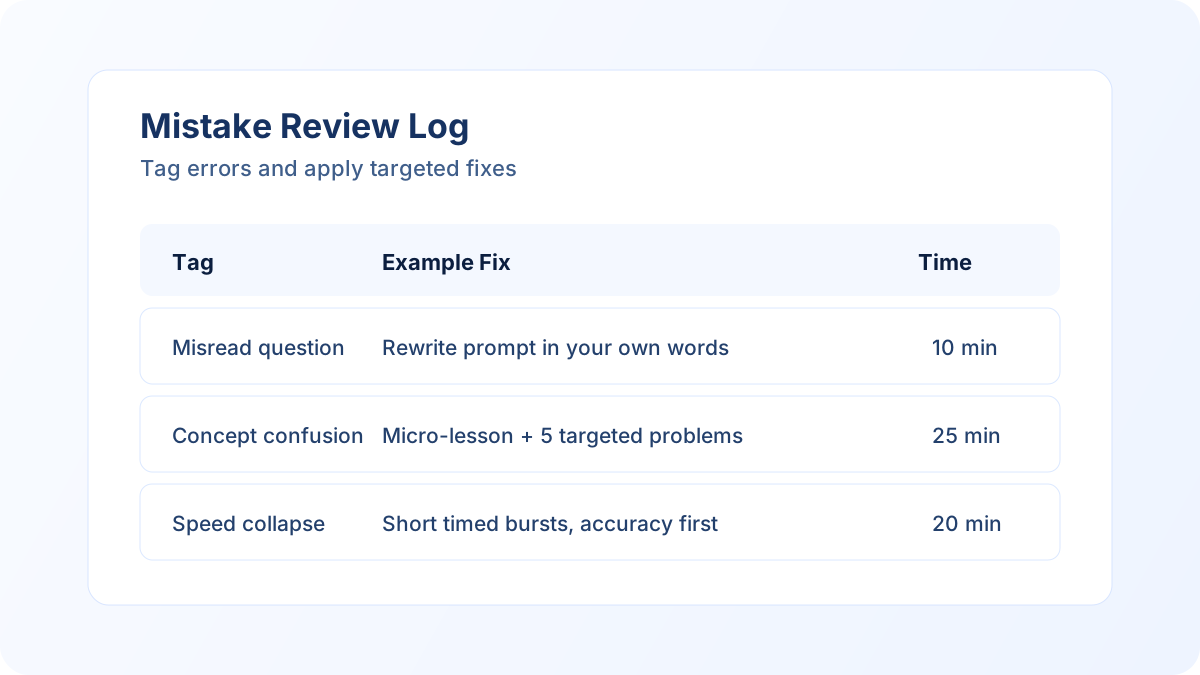
Mistakes should become categories. If a student only re-reads solutions, they rehearse recognition—not retrieval. Instead, tag errors: arithmetic slip, concept confusion, misread question, incomplete reasoning. The tag determines the fix.
| Tag | Example fix | Time box |
|---|---|---|
| Misread | Rewrite question in own words before solving | 10 min × 3 |
| Concept gap | One micro-lesson + 5 targeted problems | 25 min |
| Speed collapse | Shorter timed bursts; protect accuracy first | 20 min |
Mastery is not “seeing a solution once.” Mastery is being able to explain it under mild time pressure—without hints.
Pace, sleep, and the myth of “more hours”
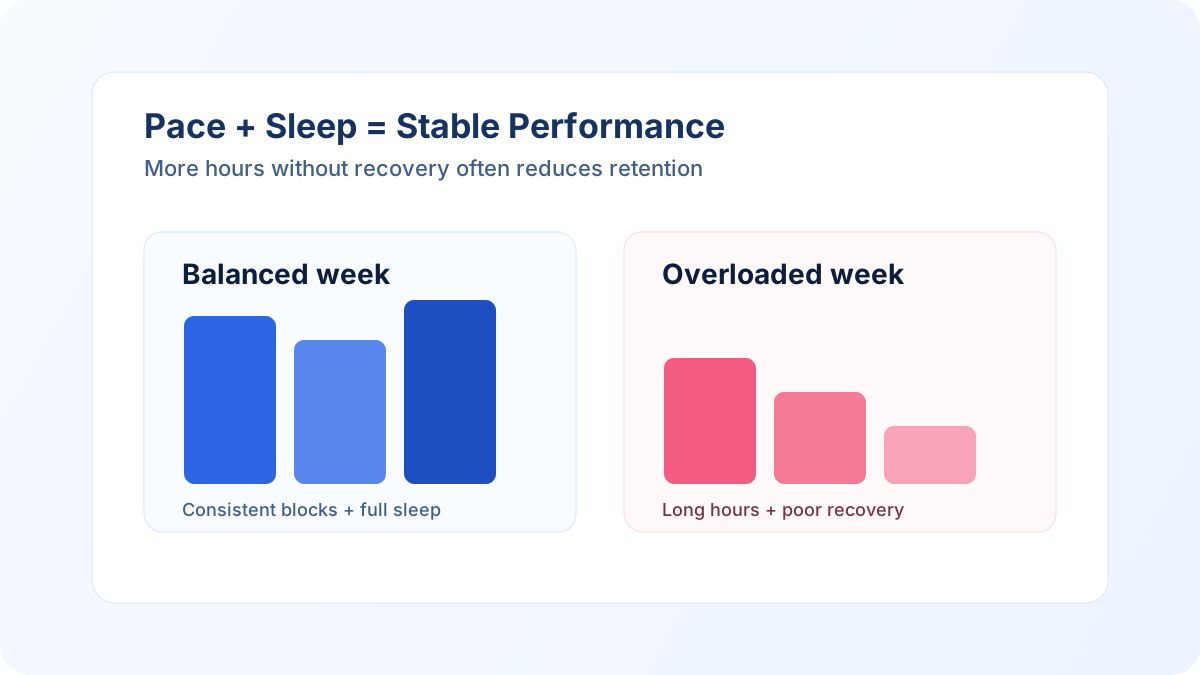
Volume without feedback quality produces busywork. If sleep drops, working memory drops—especially for algebra manipulation and multi-step geometry. Protect sleep like it is part of the syllabus (because it is).
If you want a structured pathway beyond self-study, our course tracksare designed to interleave consolidation with extension—so students don't plateau after the first term of enthusiasm.
When you're ready
Prefer a plan tailored to your child's level?
A short diagnostic clarifies gaps, pace, and goals—so revision and classroom work compound instead of repeating the same mistakes. There is no obligation to join a batch after the conversation.
For parents: supportive without becoming the “second teacher”
The most helpful parent stance is curiosity: “What strategy did you try first?” rather than “Do it like this.” The second stance is boundaries: consistent timing, phone away, and a clear stop time so maths doesn't swallow the evening.
Academic integrity and competitive exams
Shortcuts that only work on a narrow problem set create fragile confidence. We prefer methods that still work when the question is slightly unfamiliar—because that is what exams increasingly reward.
For a deeper view of how we think about teaching leadership and standards, see Dr. Aryani's profile—and treat these articles as companions to structured classroom work, not replacements.
Related Resources
Ravet programmes, diagnostics, and guides that match this topic—keyword-rich paths to our coaching centre and course pages.
- Earnest Scholars coaching centre RavetProgrammes, location, and how admissions works at our Ravet academy.
- Class 8-10 coaching in RavetStructured school coaching when habits need weekly reinforcement.
- book free maths diagnostic in RavetMap level and gaps before batch or fee decisions.
- Class 8, 9 & 10 maths coaching in RavetClass-wise curriculum and board practice at our Ravet centre.
- Classes 11–12 PCMScience-stream depth when school pace feels uneven.
- Classes 11–12 CommerceCommerce papers when you want formats and mocks—not last-minute panic.
Frequently asked questions
Short answers to common questions—aligned with what you read above, for quick scanning.
Comments & questions
We route discussion through WhatsApp so a human can reply—no Disqus ads or anonymous pile-ons. Add your note below; you can edit the message before sending.
Keep reading
Related articles
Same editorial standard—topics that pair well with what you just read.


Programmes this topic pairs with
Articles are for orientation—structured teaching happens inside the right batch. If one of these tracks matches your goals, the next honest step is a diagnostic conversation.
Prefer a plan before you pick a track? book free maths diagnostic in Ravet or message the Ravet office.
Earnest Scholars
Turn this reading into a clear next step
If the ideas here match what you want at home, a free diagnostic is the calm way to check level and fit—before batch or fee decisions.
Comments & discussion
Threaded comments are not enabled on this template yet. If you want public Q&A, we recommend pairing articles with a moderated channel (WhatsApp community, periodic office hours, or a lightweight forum).